
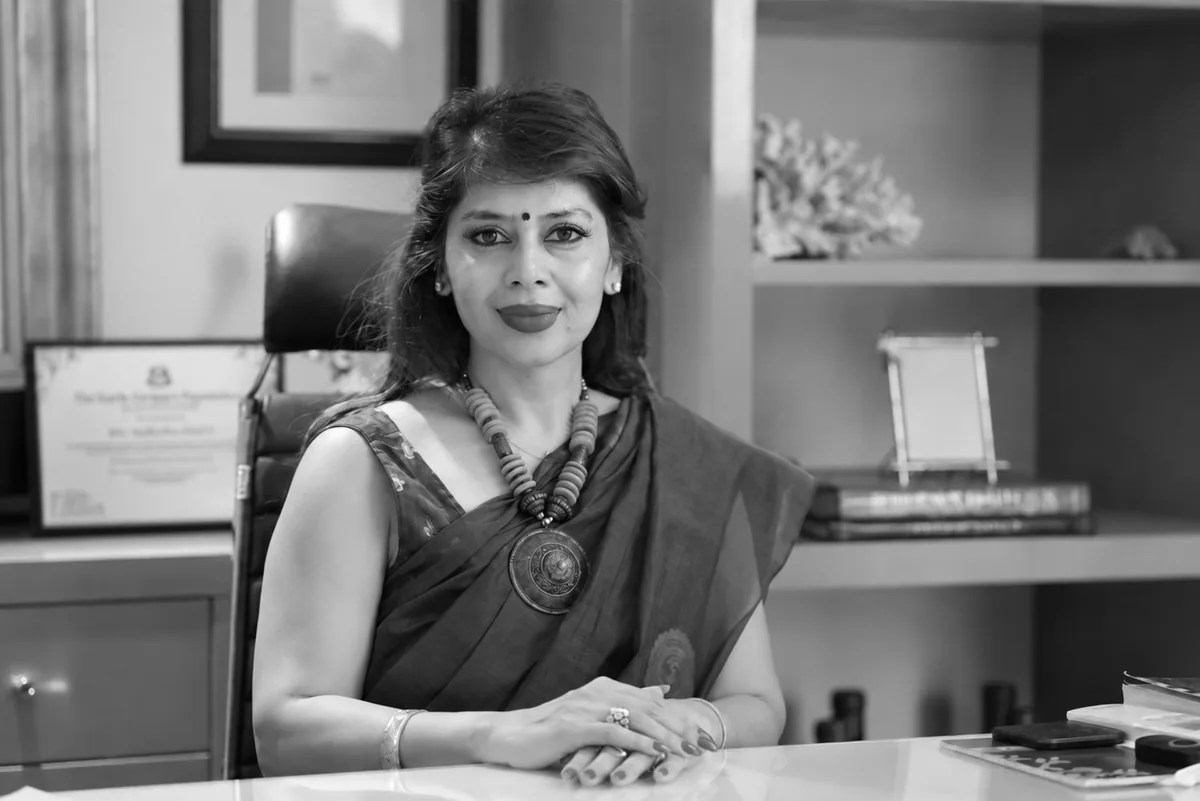
Chairperson
No matter where a woman comes from, rights mean very little when there is no safe way to know or claim them without fear or shame. Seeking help should never carry a stigma. Justice is for everyone. Yet for too many people, the path to claiming their rights can feel difficult, unfamiliar, or simply out of reach.
In my work, I kept seeing how wide that distance can be. A woman might have legal protection against violence, workplace discrimination, or rights to property, yet find herself completely lost on how to claim those protections. Sometimes the barrier is a lack of awareness; other times, the law itself leaves a quiet gap where a woman's reality simply isn't covered. How a woman experiences the legal system is deeply tied to who she is—her caste, income, family, education, and community all shape whether she can seek help and whether she will be heard.
Justice rarely stands in isolation. A woman's ability to claim her rights depends just as much on her health, her livelihood, climate vulnerability, and the roof over her head. These are not separate problems sitting beside the legal ones they shape it, delay it, and sometimes decide it before a case is ever filed. If justice is this interconnected in a woman's life, our approach to it has to be too.
Starting Amarra Philanthropic Foundation (APF) came from a quiet, persistent conviction that we need to address the practical side of justice. APF is a personal commitment born out of care for our community to walk alongside women as they navigate systems that can feel distant and complex.
Our focus rests on two pillars: legal literacy and legal aid. Knowing your rights is essential, but knowledge alone cannot enforce a claim. At the same time, offering legal help is incomplete if we do not also pay close attention to where the law fails women entirely. There is much to learn and much to build. But more than anything, I hope APF becomes a place where difficult conversations are allowed to happen—where a woman does not have to arrive with the right words or a fully-formed case, only with what she is actually carrying. A space held for her, for as long as she needs it. That is the organisation we want to build.
Madhulika Bhattacharya Dhall
Chairperson, Amarra Philanthropic Foundation