





Community
Women from marginalised communities
In India, having a legal right does not mean having access to justice. While nearly 80% of citizens qualify for free legal aid, fewer than 3% ever use it. For low-income families, the justice system is simply too expensive to navigate. A single day in court costs an estimated ₹2,047 in lost wages and travel expenses. As a result, over 96% of litigants earning under ₹3 lakh a year are forced to settle disputes outside the legal system often on unfair terms. When legal battles intersect with poverty, domestic violence, land disputes, or missing documentation, women and children are left the most vulnerable. Amarra Philanthropic Foundation exists to bridge this gap between legal rights and real-world access.
Women from marginalised communities

North-East and South-East Delhi
Tap a pillar to read more
We work in collaboration with communities, organisations, legal practitioners and institutions — because meaningful access to justice cannot be built by one organisation working alone.
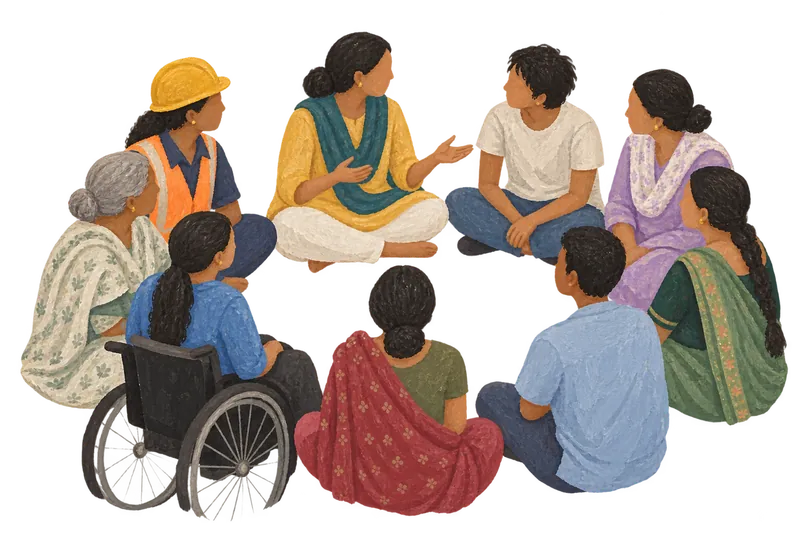
We build relationships directly with communities through conversations, workshops and practical sessions on health, financial literacy, digital awareness and legal rights. We stay engaged over time, creating spaces where people can ask questions, understand their options and seek support when they need it.
We work alongside organisations that already have trusted relationships within communities, as well as specialist organisations that can provide support or referrals. These collaborations help connect people to the expertise and services that may be relevant to their circumstances.

We work with impaneled lawyers to provide legal advice, navigation and representation. As the network grows, we aim to build a community of practitioners who can exchange learning, strengthen practice and contribute to more accessible and responsive legal support.

We engage with the institutions that shape people's experience of justice, including courts, police and public services. By learning from how these systems work in practice and where people encounter barriers, we seek to contribute to more responsive systems and institutional practice.